

As we head into the last few weeks of the year and the nights get longer, the late summer highs of UK Gilt yields seems long gone, however for another group of investors, the mood is very different.
Bitcoin has hit many highs this year, the most recent topping USD 126,000 in October (at the time of writing it just dipped below 100,000). Now, this might be an unusual topic to talk about in the context of regulatory data, yet on closer analysis, we can see something interesting. Spot Crypto (such as Bitcoin) isn’t reportable under MiFID, however Bitcoin Exchange-Traded Funds (ETFs), Exchange-Traded Notes (ETN’s) and Exchange-Traded Products (ETPs) are reported under MiFID (with the latter two being classified as debt instruments).
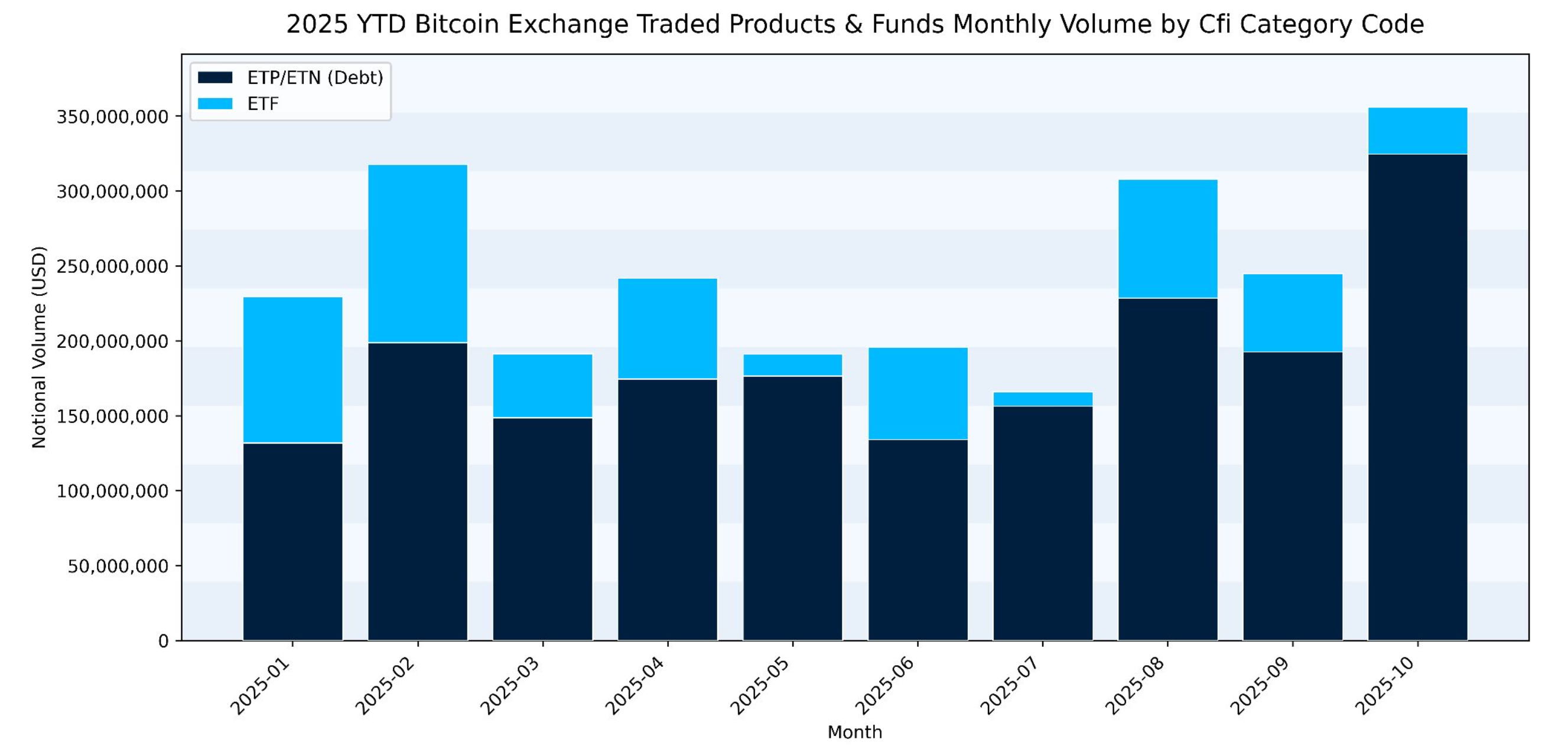
When we look at Bitcoin-related instruments there is a slight upwards trend in ETP/ETN volumes over the year, potentially helped by the FCA’s removal of restrictions for retail investors1 (in the EU legislation differs based on jurisdiction).
ETF volumes have no noticeable trend and are still restricted for retail by the FCA, with differing rules across the Eurozone.
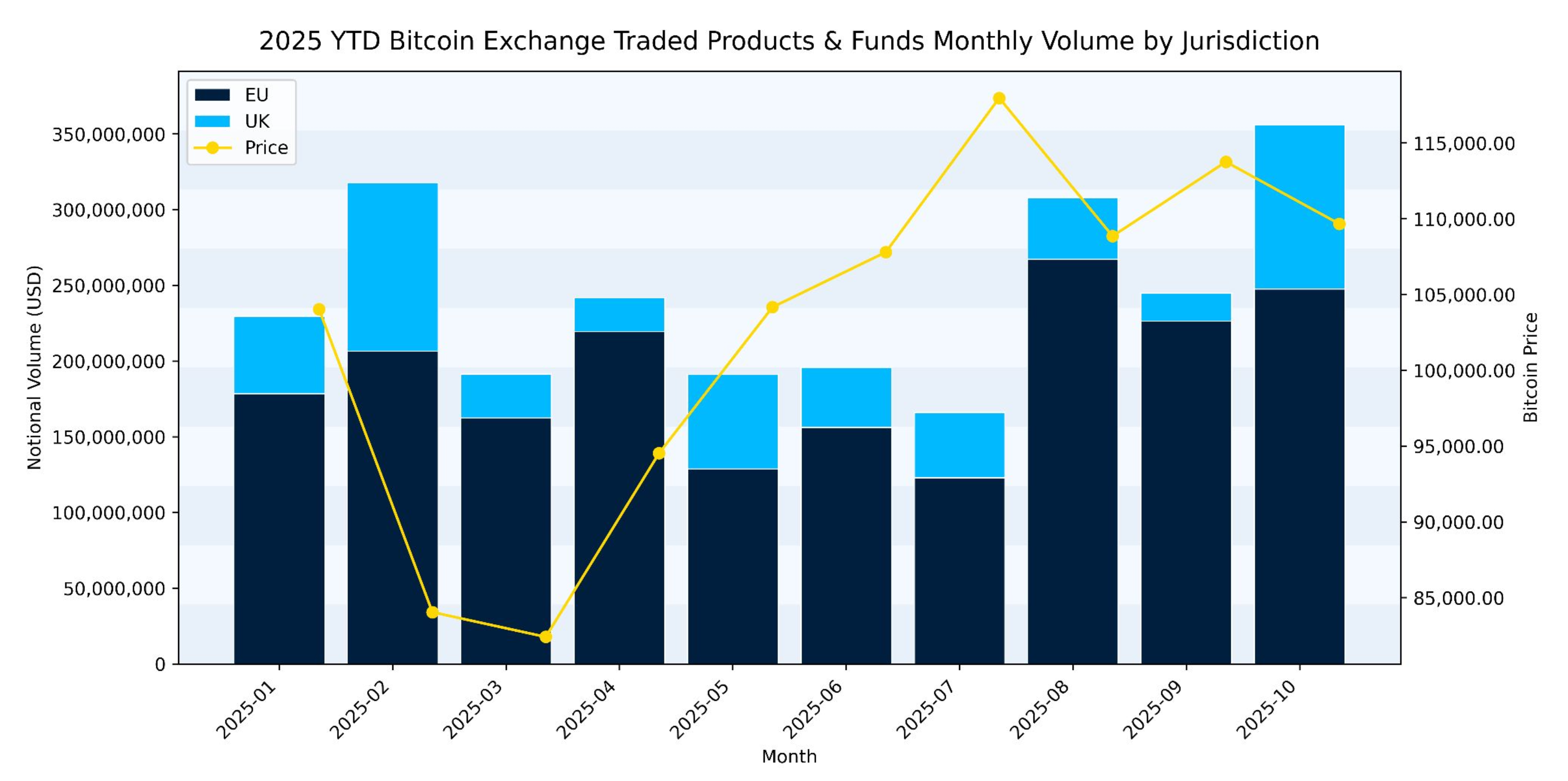
If we break down by jurisdiction, volume trends overall fluctuate from month to month, but volumes reported to the FCA are higher in October (when the ban was lifted1) than any month other than February (where interestingly, the overlay shows us the Bitcoin price was significantly lower).
As time goes by (and as regulations change), interest in using MiFID data to learn more about crypto related flows may increase.
1https://www.fca.org.uk/news/press-releases/fca-lift-ban-crypto-exchange-traded-notes

%20(10).png)
%20(9).png)